“Black henna” is not safe to put on skin. It is usually henna darkened with a coal-tar hair dye containing PPD (p-phenylenediamine), which the U.S. Food and Drug Administration says can cause dangerous skin reactions in some people. Natural henna stains orange-brown to reddish-brown, never jet black. If a paste promises an instant black stain, ask what is in it.
Is black henna safe?
No. The FDA’s fact sheet on temporary tattoos and henna explains that the extra ingredient used to blacken henna is often a coal-tar hair dye containing PPD, “an ingredient that can cause dangerous skin reactions in some people.” By law, PPD is not permitted in cosmetics intended to be applied to the skin, and the FDA says it has received reports of skin injuries from products marketed as henna and as “black henna.”
A dermatologist quoted by Cleveland Clinic sums it up: henna tattoos by themselves aren’t necessarily the problem; it’s the components added to make them darker or faster that cause it.
What is PPD?
PPD (para-phenylenediamine) is a chemical widely used in permanent hair dye. DermNet, the dermatology reference, lists dark temporary henna tattoos among its other uses, alongside textile dyes, black rubber and printing inks. Hair dyes that contain it carry a warning on the box for a reason.
In black henna it does two things people want: it makes the stain darker and helps it develop faster. That convenience is where the risk comes from.
What can a black henna reaction look like?
Reactions range from an itchy rash to blisters and scarring. The American Academy of Dermatology (AAD) lists these signs of a temporary tattoo reaction, which it says is usually caused by a black dye containing PPD:
- Redness and swelling
- Intense itch
- Pain
- Tiny bumps or scaly, raised skin
- Blisters, which may open and leak
- Loss of skin color
- Scarring
The AAD says a reaction can appear any time between getting the tattoo and 3 weeks later. Cleveland Clinic adds increased sensitivity to sunlight and permanent scarring to the list of effects that can outlast the design itself.
Can one black henna tattoo cause problems later?
Yes, it can. DermNet explains that after a PPD reaction subsides, lifelong sensitivity to PPD is likely. Toronto Public Health, sharing Health Canada’s advice, notes that a PPD allergy may lead to sensitivity to other products such as hair dye, sunblock and some black clothing. That is why a “harmless” holiday tattoo can matter years later, for example the first time someone colors their hair.
The AAD writes its advice for “you or your child,” so the same care applies to kids’ henna at parties and festivals.
What does natural henna look like?
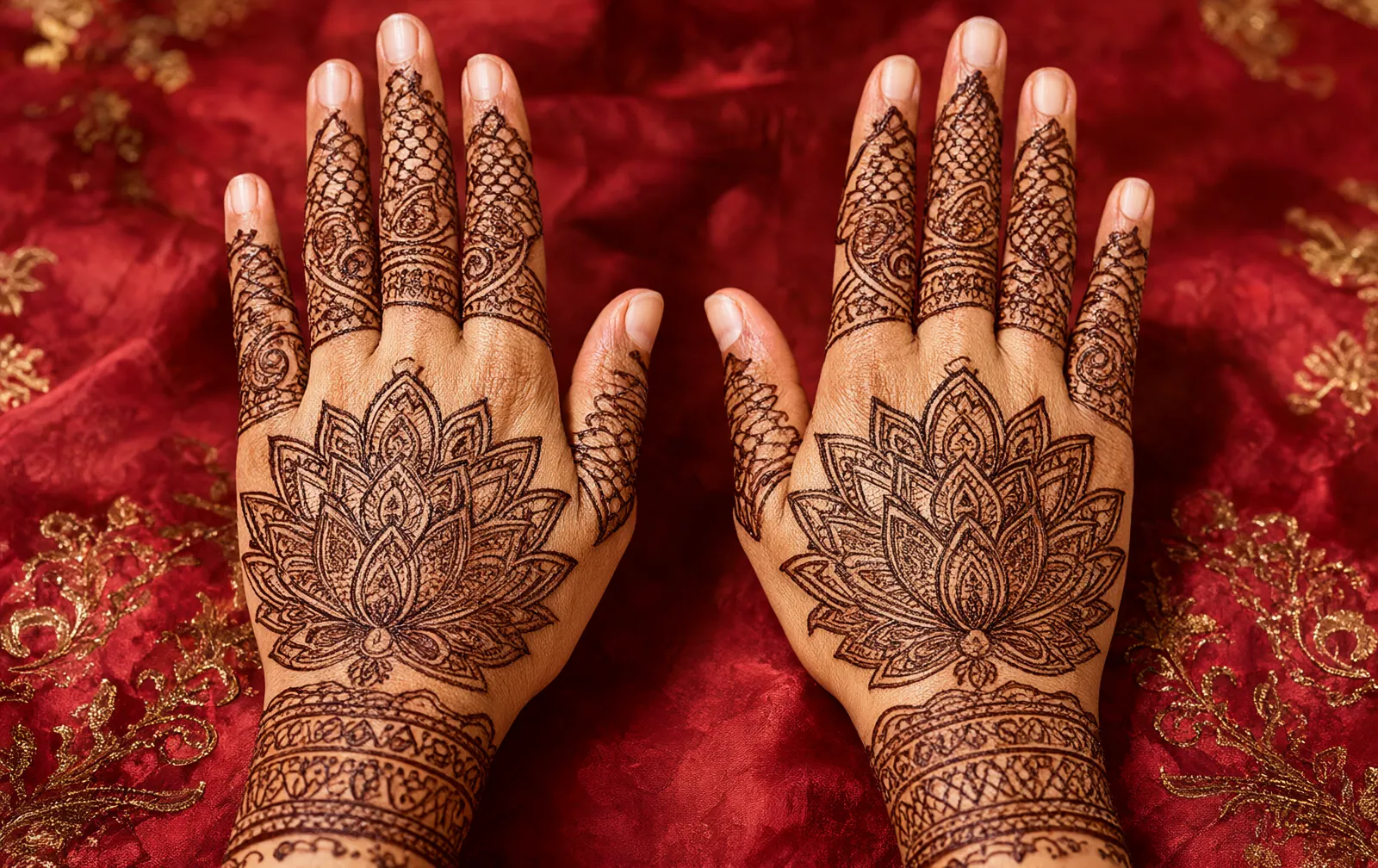
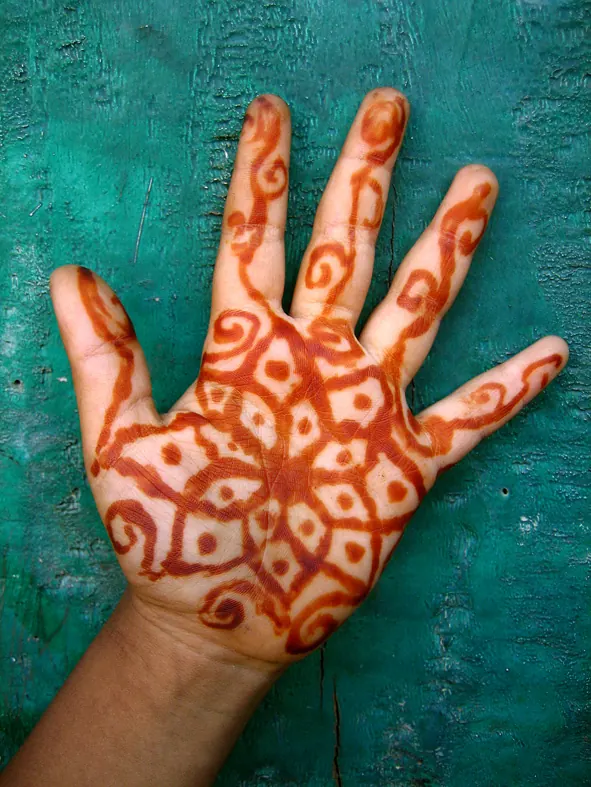
Natural henna leaves a warm brown stain, not black. The FDA notes that henna typically produces a brown, orange-brown or reddish-brown tint, and that other ingredients must be added to make colors marketed as “black henna” or “blue henna.”
Here is what natural henna usually looks like, from WebMD’s medically reviewed guide:
| Stage | Natural henna | Warning sign |
|---|---|---|
| The paste | Greenish-gray powder mixed into a paste | Paste that is jet black |
| Right after the paste comes off | An orange stain from henna’s copper-colored dye | A dark black stain straight away |
| Over the next 2 to 4 days | Darkens to brown or reddish-brown | Stays inky black |
| Smell | No chemical or gasoline smell | Smells like chemicals or gas (Cleveland Clinic: walk away) |
Darkest stains usually show on palms and soles. WebMD explains the dye binds to keratin, and hands and feet have the most of it.
What should I ask any henna artist?
Ask before the paste touches your skin. A good artist will be happy to answer:
- “What is in your henna paste?” Ask for the ingredients, not just “it’s natural.”
- “Is there any PPD, hair dye or black dye in it?” Health Canada’s advice is to ask the vendor to confirm that PPD or hair dye was not added.
- “What color will the stain be?” Natural henna starts orange and deepens to brown or reddish-brown.
- “Do you mix it yourself, or is it pre-made?” For pre-made cones, ask to see the label. The FDA says cosmetics sold at retail need an ingredient list; paste used only by professionals doesn’t, so just ask.
- “What should the paste smell like?” Cleveland Clinic’s advice: if it smells like chemicals or gas, walk out.
One more thing worth knowing. The FDA states that in the United States henna is approved only for use as a hair dye, not for direct application to the skin. It also says FDA has received injury reports for products marketed as henna, not only “black henna.” That is one more reason to ask what is in any paste before it goes on.
What should I do if I react to henna?
Stop and get medical advice. The FDA’s guidance on cosmetic reactions says the first step is to stop using the product and contact your healthcare provider. The AAD says a serious reaction needs immediate medical care.
You can also report the reaction to the FDA: its page on how to report a cosmetic-related complaint explains how. Cleveland Clinic’s dermatologist notes you may be asked to report it.
This is general safety information, not medical advice.
What henna does Kurves use?
To confirm What henna does Kurves use: brand or recipe, ingredients, and does Fariyal mix her own paste?
Whatever you book, at Kurves or anywhere else, you are always welcome to ask what is in the paste before your appointment starts. Henna designs at Kurves start at $10 and depend on the design and the area. For weddings, see bridal henna.
Book: Henna · Bridal henna · Prices · FAQ